One component of the project is conducting evidence-based research on the feasibility and potential benefits of different aspects of a two-state solution and creating an online repository of resources and research findings that inform stakeholders, policy debates and strategies aimed at fostering a (two-state) solution. In 2025, three research papers/policy briefs – were published.
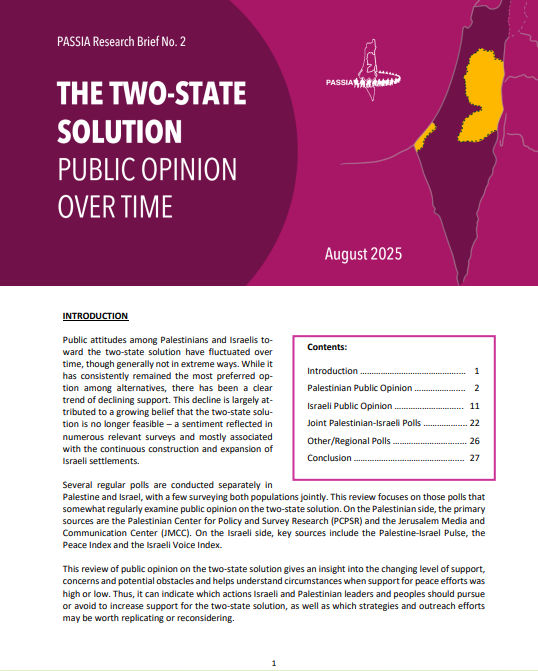
Past Peace Processes & Their Challenges – A Historical Overview
English, 28 pages, August 2025
This policy brief reviews and assesses the history of the numerous peace initiatives that have been launched since the early 1990s in an effort to resolve the Israeli-Palestinian conflict and to establish a framework for coexistence. None of them – from the Madrid Middle East Peace Conference and the Oslo process to the Annapolis Conference and subsequent negotiations – succeeded in ending the occupation and providing a lasting and just solution. Instead, each attempt offered moments of both cautious optimism and deep disillusionment. This research paper provides a historical overview of key peace processes, examining their objectives, achievements, and the persistent obstacles that have undermined their success. It includes annexes for reference in table form: a) an overview table summarizing Palestinian and Israeli perspectives on the failures of the various attempts at peace, and b) a table comparing the different peace efforts by items such main goal, participation, achievement, pitfalls and impact.
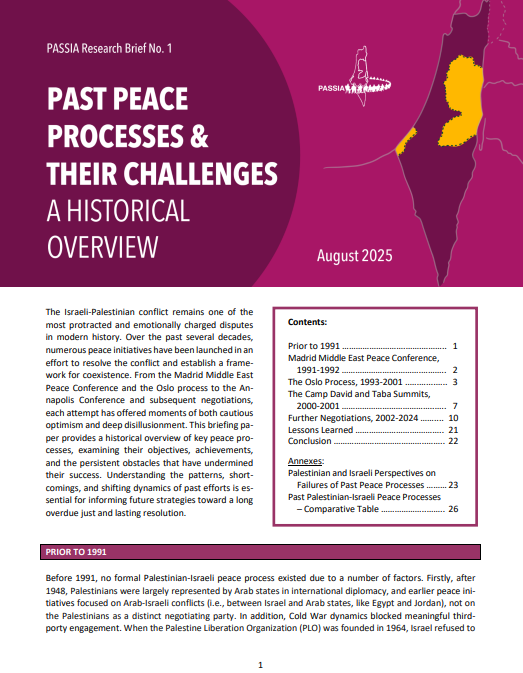
The Two-State Solution – Public Opinion Over Time
English, 28 pages, August 2025
Public attitudes among Palestinians and Israelis toward the two-state solution have fluctuated over time, though generally not in extreme ways. While it has consistently remained the most preferred option among alternatives, there has been a clear trend of declining support, which is largely attributed to a growing belief that the two-state solution is no longer feasible – a sentiment reflected in numerous relevant surveys. Several regular polls are conducted separately in Palestine and Israel, with a few surveying both populations jointly. This review focuses on those polls that somewhat regularly examine public opinion on the two-state solution on both the Palestinian side and the Israeli side. This review of public opinion on the two-state solution gives an insight into the changing level of support, concerns and potential obstacles and helps understand circumstances when support for peace efforts was high or low. Thus, it can indicate which actions Israeli and Palestinian leaders and peoples should pursue or avoid to increase support for the two-state solution, as well as which strategies and outreach efforts may be worth replicating or reconsidering