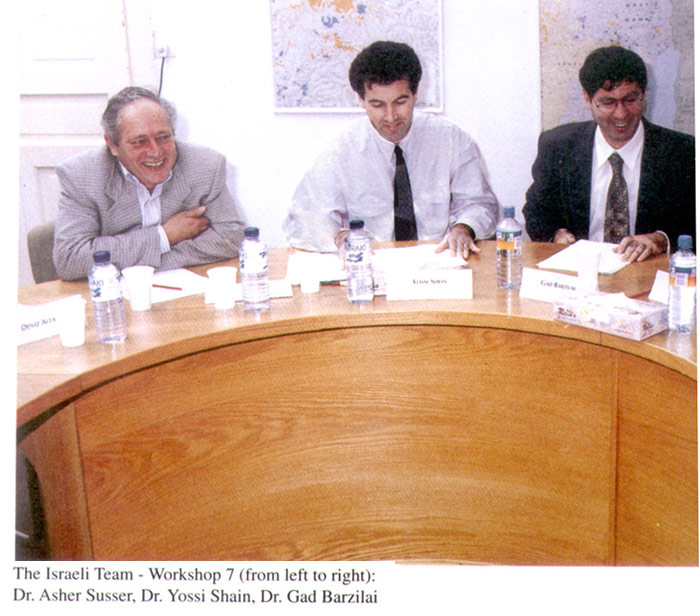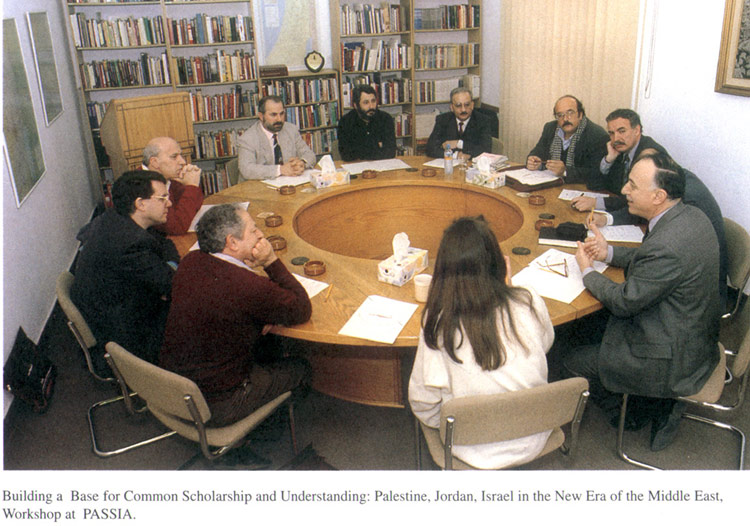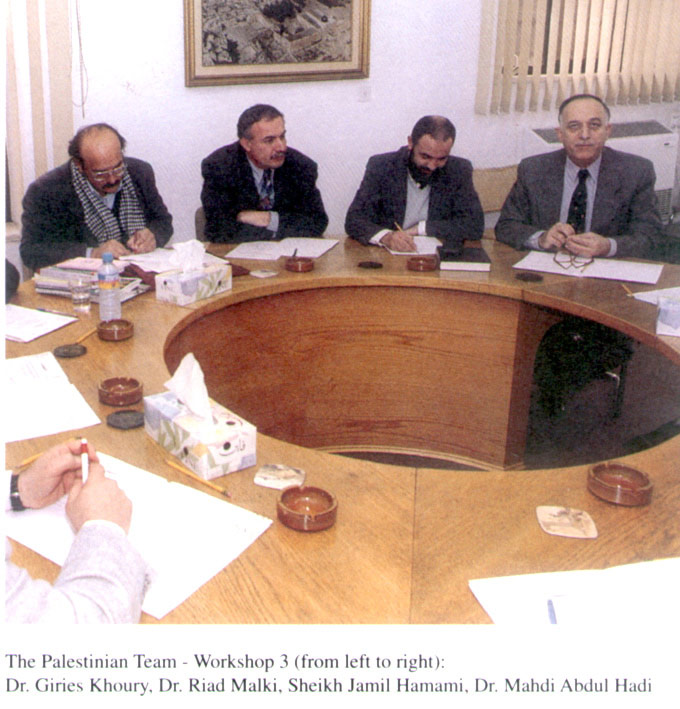
The three players at the heart of the transformation process the Middle East was undergoing in the early to mid-1990s were Palestine, Jordan, and Israel, yet despite the importance of internationally applauded agreements reached between them during 1993 and 1994, the real process of achieving durable peace among the people had only just begun. However, many obstacles remained that could jeopardize the peace process, as misunderstandings and mistrust generated by decades of conflict still prevailed in each of the societies involved.
Against this background, three institutes – PASSIA, the Center for Strategic Studies (Amman) and the Moshe Dayan Center (Tel Aviv) embarked on a joint project to contribute to resolving differences by pooling their resources, knowledge, and expertise. Through a program of dialogue and workshops, the aim was to promote understanding regarding their separate identities and existence, their histories and their relationship to others in the region. The emphasis was on domestic developments in the three societies, as an understanding of the countries and people among whom peace is intended to prevail is a prerequisite for any conflict to be truly resolved.
Each workshop (click here for a full list) involved nine scholars, three from each institution/country, chosen based on their expertise. One scholar from each team presented a paper, followed by a discussion with the other participants. The workshops addressed various subjects and served as a venue for open, multilateral dialogue. At the end of the project, the proceedings, including the position papers presented in those trilateral sessions, were published in a book.