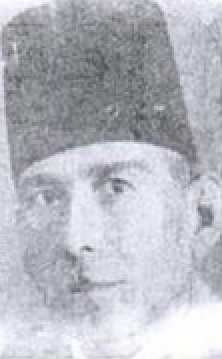
Birth: NULL/NULL/1878 Death:NULL/NULL/1950
Born in Jaffa in 1878 to a Christian Orthodox family; studied at the Frères College in Jaffa, then at the Kaftein Orthodox School in Lebanon; continued his education at the AUB; one of the pioneers of Arab media in Palestine; co-founder (with his cousin Yousef) of the bi-weekly Arabic newspaper Filastin in Jaffa in 1911 until WWI when it was banned (by the Ottomans) for the first time; was deported to Anatolia in 1914 for opposition to Ottoman control; was chosen as private secretary of Prince Faisal Bin Al-Hussein in Damascus in 1920 and worked in the Royal Court until the French occupation of Syria in 1923; returned to Jaffa, resuming publication of Filastin, this time criticizing the British authorities; published an English version of the Filastin newspaper in 1930; stipulated that the Damascus newspaper publishers devote half the columns of their papers to the Palestinian cause before giving them their monthly allowance; was considered a moderate politician; known also for his poetry skills (recited, for example, in front of Arab historian Georgi Zeidan during the latter’s visit to Palestine in 1913); Steering Committee member of the Arab Al-Umma Bank; elected to the 7th Congress of the Arab Executive Committee in June 1928 for Jaffa; published a weekly English edition of Filastin from 1929-31; called for the establishment of the first Arab Trade Exhibition in Jerusalem in 1933, aiming at resisting Zionist economy; member of the oppositional National Defense Party (mu’arada faction) in the Arab Executive Committee in 1934; prominent member of Al-Difa’ Al-Watani Party, encouraging more Arab representation in the Orthodox Church; headed several Arab Christian-Orthodox conferences in Palestine and Transjordan; moved to Beirut in 1938, where he died on 29 June 1950; his son Raja Al-Issa continued to publish the newspaper until 1967 when he merged it with Al-Dustour (Jordanian) newspaper.