

Course Outline
Introduction
PASSIA’s seminar on “Japan, Palestine and the Middle East” was part of PASSIA’s annual program on Training and Education in International Affairs. The purpose of this program is to help Palestinian professionals broaden their knowledge and contacts in the international arena, develop their expertise in specialist areas important to their community, and enhance their relations with others.
In focusing on Japan, Palestine and the Middle East, the 1999 seminar recognized that Japan has been an important source of economic aid and diplomatic support for the Palestinian community over recent years, and notably since the Oslo Accords between Israel and the Palestinians were signed in 1993. Japan was among the countries that sent observers to monitor the Palestinian elections of January 1996, and Japanese assistance has been crucial in regard to economic development within the Palestinian Autonomous Areas. Japanese contacts with the Palestinian community on the ground have increased accordingly and the Japanese Foreign Ministry has established a program for bringing Palestinian representatives to Japan for informational and familiarization tours. Among the wider Palestinian community, however, there is little knowledge about Japan, its history and culture, its contribution in the peace process and its role in the development of Palestine. The 1999 PASSIA seminar on Japan, Palestine and the Middle East was designed to meet this obvious need for increased understanding and contact.
The following report contains the proceedings of the PASSIA seminar, including presentations given by the lecturers and summaries of the subsequent discussions. In the appendices, one can find information about the lecture program, the lecturers, the Palestinian participants, and a list of relevant reading material.
PASSIA would like to take this opportunity to express its deep appreciation to the Japanese Endowment Fund established by the UNDP/Program of Assistance to the Palestinian People (PAPP), Jerusalem, whose kind support made this seminar program possible.
We also thank most warmly the guest lecturers from Japan and all the local and regional scholars whose lectures and expertise contributed greatly to the success of the seminar.
Last, but not least, the PASSIA team would like to thank the Palestinian participants for their comments and enthusiasm to learn about the socioeconomic aspects, political system, and foreign policy making of Japan especially with regard to the Middle East and Palestine.
Jerusalem,
May 1999
Dr. Mahdi Abdul Hadi
Head of PASSIA
1. Preparation
PASSIA consulted with Palestinian and foreign scholars in order to plan and implement the seminar. Consultation on the planning and implementation of the seminar began in December 1998. At the beginning of January 1999, PASSIA advertised the seminar in the local press, Al-Quds and Al-Ayyam; notification was also given to national organizations such as universities, research centers, and institutions of the Palestinian Authority. No fees for undertaking the course were required from the participants.
2. Participant Selection Procedure
PASSIA formed a committee specifically for the preparatory stage and oversight of the seminar. Its members were: Dr. Mahdi Abdul Hadi, Head of PASSIA, Dr. Rosemary Hollis, Head of the Middle East Program at the Royal Institute of International Affairs, London, and Mrs. Deniz Altayli, PASSIA’s Program Director. PASSIA received applications from all over the Palestinian Territories and all applicants were invited for interviews. Dr. Hollis came from London specifically to conduct the interviews, which took place between 27 and 30 January 1999 in Jerusalem and Ramallah. Seventeen of the interviewees were selected to participate in the seminar, as well as four reserves.
3. Reading Period
A list of reference materials providing background information on the topics to be covered in the seminar was prepared in consultation with relevant experts. Required reading materials were photocopied and distributed to the participants at the beginning of February, in order that they could familiarize themselves with the basic facts and issues in advance of the seminar. Additional recommended reading material was available for the participants at PASSIA’s library.
The reading period included the preparation of a background paper; each participant was assigned a specific topic to research and to present during the seminar itself.
4. Lecture Program
From 14-19 March 1999 a series of lectures, discussions, and other educational exercises were conducted by local scholars and visiting foreign experts. In addition, representatives from the Japanese diplomatic corps in Tel Aviv gave presentations and the participants themselves presented the background research papers that they had prepared as part of the one-month preparatory reading period.
5. Social Activities
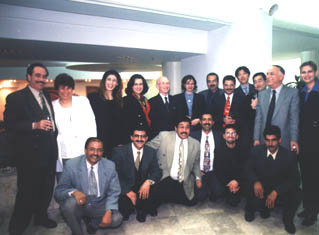
During the six-day seminar, beverages and luncheon for all participants and lecturers were provided by PASSIA. One evening, PASSIA hosted a reception at the Ambassador Hotel in Jerusalem for all involved in the seminar, as well as for representatives of Palestinian institutions, the diplomatic corps and friends of PASSIA.
6. Writing Assignments
Participants were required to write a second essay after the close of the seminar. A list of suggested essay topics was made available during the seminar, from which participants were invited to choose the subjects on which they wished to write. Essays had to be completed within one month of the end of the seminar.
Participants who attended the entire seminar and completed the reading and writing assignments, assuming they have attended the entire seminar, received a certificate from PASSIA recognizing their successful completion of the seminar program.
Table of Content
Introduction and Seminar Program
Opening Remarks and Orientation
Dr. Mahdi Abdul Hadi and Dr. Rosemary Hollis
Pre-Modern History of Japan
Prof. Ben-Ami Shillony
Modern History of Japan
Prof. Ben-Ami Shillony
The Political System of Contemporary Japan
Prof. Ikuo Kume
The Decision-Making Process in Japan
Prof. Ikuo Kume
Economic Development in Japan in 1990s
Prof. Osamu Nariai
Japan, the Asian Economy and the Current Crisis
Prof. Osamu Nariai
Japan’s Software Industry
Kazuhiko Adachi
Trends in Japanese High Technology Ventures
Kazuhiko Adachi
Overview: The Axis of Japan’s Foreign Policy
HE Yoshiji Nogami
Political Relations between Japan and the Middle East
Prof. Akifumi Ikeda
Japanese Policy in the Middle East – With a Focus on Japan’s New Approach Toward the Region
Raquel Shaoul
Promotion of Private Investment in the Middle East – A Japanese Perspective
Yoshiki Hatanaka
Factors of Economic Success in Japan and Asia – Implications for the West Bank and Gaza Strip
Yoshiki Hatanaka
Japan’s Contribution to Palestinian Society
Katsuyoshi Hayashi
Appendix B: Palestinian Participants
Appendix C: Reading Material
Appendix D: Japan at a Glance
Lecture Program
March 14, 1999
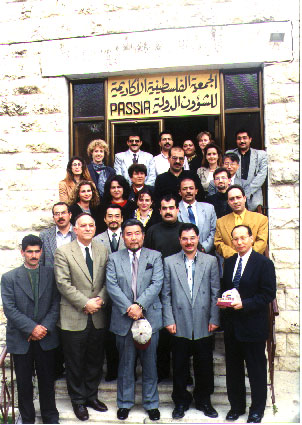
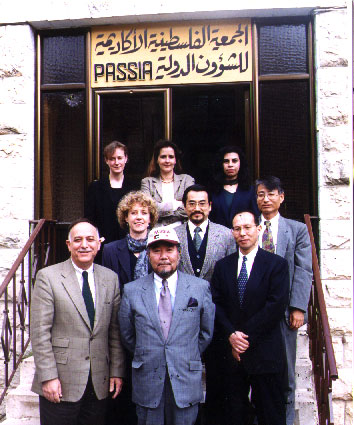
8 a.m. – 9:30 a.m. – Registration / Group Photographs
9:30 a.m. – 11 a.m. – Opening Remarks and Orientation
Dr. Mahdi Abdul Hadi and Dr. Rosemary Hollis
11 a.m. – 11:15 a.m. – Break
11:15 a.m. – 12:45 p.m. – Overview: The Axis of Japan’s Foreign Policy
HE Yoshiji Nogami
12:45 p.m. – 2 p.m. – Lunch
2 p.m. – 3:30 p.m. – Japanese Economic Development after World War II
Prof. Osamu Nariai
3:30 p.m. – 3:45 p.m. – Break
3:45 p.m. – 5 p.m. – Japan and the Asian Economy
Prof. Osamu Nariai
March 15, 1999
9 a.m. – 10:30 a.m. – Pre-Modern History of Japan
Prof. Ben-Ami Shillony
10:30 a.m. – 10:45 a.m. – Break
10:45 a.m. – 12:15 p.m. – Modern History of Japan
Prof. Ben-Ami Shillony
12:15 p.m. – 1:30 p.m. – Lunch
1:30 p.m. – 3 p.m. – States and the International System – Theoretical Overview
Dr. Rosemary Hollis
3 p.m. – 3:15 p.m. – Break
3:15 p.m. – 4:45 p.m. – Japan in the International System
Dr. Rosemary Hollis and Raquel Shaoul
March 16, 1999
9 a.m. – 11 a.m. – Participant Presentations
Dr. Rosemary Hollis
11 a.m. – 11:30 a.m. – Break
11:30 a.m. – 1 p.m. – Debate on the Japanese Economy
Prof. Osamu Nariai
1 p.m. – 2:15 p.m. – Lunch
2:15 p.m. – 5 p.m. – Participant Exercise and Film: The Story of a Friendship, Japan and Palestine
Dr. Rosemary Hollis
March 17, 1999
9 a.m. – 10:30 a.m. – The Political System of Contemporary Japan
Prof. Ikuo Kume
10:30 a.m. – 10:45 a.m. – Break
10:45 a.m. – 12:15 p.m. – Japan’s Decision-Making Process and Debate on Japanese Politics
Prof. Ikuo Kume
12:15 p.m. – 1:30 p.m. – Lunch
1:30 p.m. – 3 p.m. – Japanese Software Industry
Kazuhiko Adachi
3 p.m. – 3:15 p.m. – Break
3:15 p.m. – 4:45 p.m. – Trends in Japanese Venture Business
Kazuhiko Adachi
March 18, 1999
9 a.m. – 10:30 a.m. – Economic Relations between Asia and the Middle East
Yoshiki Hatanaka
10:30 a.m. – 10:45 a.m. – Break
10:45 a.m. – 12:15 p.m. – Promotion of Private Investment in the Middle East – A Japanese Perspective
Yoshiki Hatanaka
12:15 p.m. – 1:30 p.m. – Lunch
1:30 p.m. – 3 p.m. – Political Relations between Japan and the Middle East
Prof. Akifumi Ikeda
3 p.m. – 3:15 p.m. – Break
3:15 p.m. – 4:45 p.m. – Japan: New Political Approach to the Middle East
Raquel Shaoul
March 19, 1999
9 a.m. – 10:30 a.m. – Japan’s Contribution to Palestinian Society
Katsuyoshi Hayashi
10:30 a.m. – 10:45 a.m. – Break
10:45 a.m. – 12:15 p.m. – Palestinian Perspectives on Japan and the Japanese
Dr. Mahdi Abdul Hadi
12:15 p.m. – 1:30 p.m. – Lunch
1:30 p.m. – 3 p.m. – Debate on Japan and the Middle East
Prof. Akifumi Ikeda and Raquel Shaoul
3 p.m. – 3:15 p.m. – Break
3:15 p.m. – 4:30 p.m. – Participant Feedback and Conclusion of Seminar
Dr. Rosemary Hollis